Year 8 Science · AC9S8U04
The rock cycle.
Rocks form in three main ways. Some started as melted rock deep underground. Others began as sand, mud or shells that settled in layers. Some were heated and squeezed until they changed into new rock. In this lesson you will learn how to tell them apart, and how long each change takes.
Three landmarks in the Northern Territory
By the end of this lesson you will be able to explain how the rock in each of these places formed.
Karlu Karlu is a sacred site for the Kaytete, Warumungu, Warlpiri and Alyawarra traditional owners. Anangu are the traditional owners of Uluru and Kata Tjuta. Each place holds knowledge and stories that belong to its traditional owners. This lesson covers only the geology.
What we are learning
How igneous, sedimentary and metamorphic rocks form, how long the processes take, and how a rock's properties show how it formed and what it is good for.
I can
- 1explain how igneous, sedimentary and metamorphic rocks form
- 2identify a rock from its crystals, grains, holes, layers or bands
- 3describe the processes in the rock cycle and how long each one usually takes
- 4explain how a rock's properties make it useful for a particular job
Australian Curriculum v9, AC9S8U04: “describe the key processes of the rock cycle, including the timescales over which they occur, and examine how the properties of sedimentary, igneous and metamorphic rocks reflect their formation and influence their use”
Crayon rock cycle
Make all three types of rock from wax crayon shavings, then compare your model with the real rock cycle. You will need an adult for the melting step. The same links are at the end of the lesson.
How this lesson works
First you will learn how each type of rock forms, using models you control. Then you will watch a worked example, identify some rocks with help, and identify some on your own. After that you will follow a grain of rock around the rock cycle and match rocks to their uses. A six-question exit check comes at the end.
Your answers save in this browser, so you can come back later.
Step 2 of 11 · Review
What you already know
These three ideas come up again and again in this lesson. Answer each question, then read the feedback.
When a liquid cools down, what happens to its particles?
Which sentence describes weathering and erosion correctly?
What is it like deep underground, several kilometres below the surface?
Words you will need
Tap a dotted word to see what it means: mineral, crystal, magma, lava, sediment. The Glossary button at the top lists every word.
Step 3 of 11 · Learn
Igneous rock
Igneous rock forms when molten rock cools and hardens.
Deep underground, rock can get hot enough to melt. Molten rock underground is called magma. When it reaches the surface, for example in a volcanic eruption, it is called lava.
As molten rock cools, its particles slow down and lock together into crystals of different minerals. How big the crystals grow depends on how quickly the rock cools. Use the model to find out how.
Cooling lab
ModelChoose how quickly the molten rock cools, then watch what forms. The window shows a patch of rock about 2 cm across.
Pick a cooling speed to start.
About this model. Every run uses the same minerals, so cooling speed is the only thing that changes. Real basalt forms from a different magma with more dark minerals, which is why it is dark grey to black.
| Cools underground | Cools at the surface | |
|---|---|---|
| Name | Intrusive igneous rock | Extrusive igneous rock |
| How fast | Slowly, over thousands to millions of years | Quickly, over days to years |
| Crystals | Large, easy to see | Tiny, or none at all |
| Examples | Granite | Basalt, pumice, obsidian |
Igneous rocks in this lesson
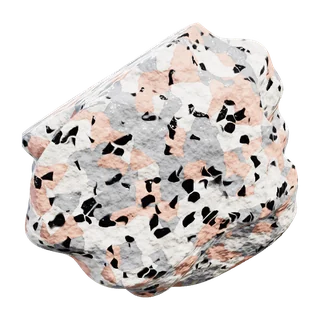
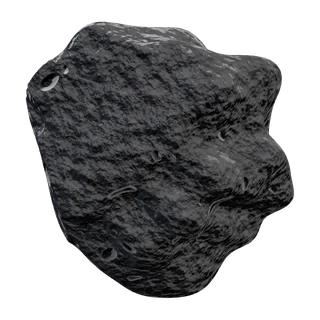
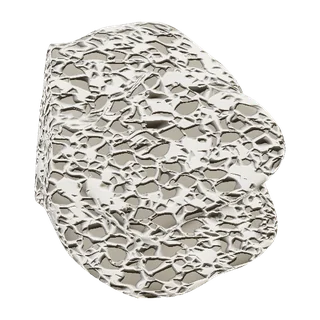
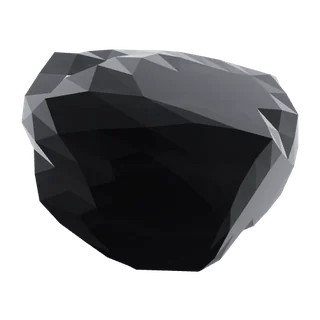
The boulders at Karlu Karlu are granite, with crystals large enough to see easily. Where did the molten rock cool?
Pumice is full of holes, and so light that it floats. How did the holes form?
Going further: same magma, different rock Extension
Magma of the same make-up can form different rocks, depending on where it cools. Granite and rhyolite form from the same kind of magma. Granite cools slowly underground and has large crystals. Rhyolite erupts as lava and cools quickly, so its crystals are tiny.
Gabbro forms from the same kind of magma as basalt, but it cools slowly underground. What will its crystals be like?
Step 4 of 11 · Learn
Sedimentary rock
Sedimentary rock forms from layers of sediment that are buried, squeezed and cemented together.
Sediment is loose material such as mud, sand, pebbles and shells. It turns into rock in four steps.
Weathering breaks rock at the surface into smaller pieces.
Erosion carries the pieces away in water, wind or ice. They knock together as they travel and become rounder.
Deposition happens when the water slows down and drops the sediment. Big, heavy pieces drop first. Layer after layer builds up, often on the bottom of a lake or the sea.
Compaction and cementation happen as more layers pile on top. Their weight squeezes the grains together and pushes out the water. Minerals left behind by the water then glue the grains in place.
Layer tank
ModelA river carrying mud, sand and pebbles flows into the tank from the left. Set how fast it flows, then let it flow and watch what drops where. Add at least two layers, then bury them.
At this speed the river can lift mud and sand.
Set the river speed, then let it flow to drop a layer.
About this model. The river always carries all three sizes. Its speed decides which ones it can lift, and how far each one travels before it settles: the faster the water, the bigger the pieces it carries, and the big pieces drop first. A flood can drop a layer in hours or days. Turning that sediment into rock usually takes thousands to millions of years.
| Sediment | Becomes | Clue in the rock |
|---|---|---|
| Mud | Shale | Very fine grains, splits along its layers |
| Sand | Sandstone | Sand grains you can see and feel |
| Pebbles and sand | Conglomerate | Rounded pebbles set in sand |
| Shells and skeletons of sea creatures | Limestone | Pale, often with shell pieces, fizzes in acid |
Sedimentary rocks in this lesson
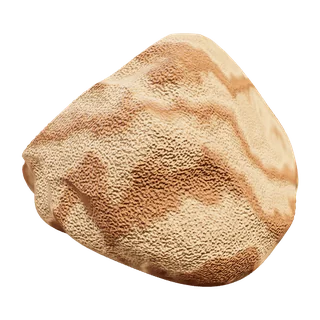
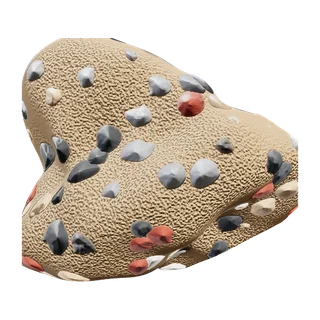
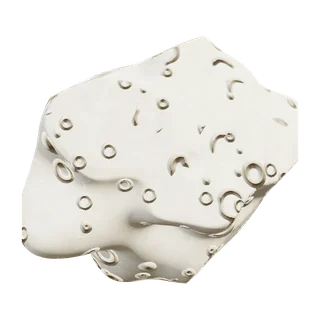
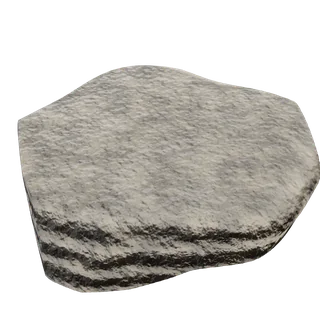
Kata Tjuta is made of conglomerate, with pebbles and boulders of granite and basalt cemented together by sand and mud. Uluru is made of arkose, a type of sandstone.
Think about the layers in the tank. Which layer formed first?
Kata Tjuta is made of rounded pebbles and boulders, cemented together. What does that tell you about how it formed?
Going further: tilted layers Extension
Sediment settles in flat layers, so in rock that has not been disturbed, the oldest layer is at the bottom. Geologists call this the law of superposition.
Uluru's layers run almost straight up and down. What must have happened to the rock after it formed? Decide, then check.
Show the answer
Movements of Earth's crust tilted the whole slab of rock. About 400 million years ago, Uluru was tipped up by about 90 degrees. You will see this on the rock cycle screen.
Step 5 of 11 · Learn
Metamorphic rock
Metamorphic rock forms when heat and pressure change an existing rock, without melting it.
Deep underground, rock can be squeezed by movements of Earth's crust and heated by nearby magma or by the hot rock around it. The rock stays solid, but its minerals change. They can grow larger, line up in the same direction, or separate into bands.
The word metamorphic comes from Greek words meaning “change of form”. These changes usually take millions of years.
Heat and pressure
ModelThis block starts as shale, a sedimentary rock made from mud. Drag the slider to add heat and pressure, and watch its minerals.
Shale · sedimentary rock
Shale is made of mud. Its tiny flat minerals point every which way.
| Starting rock | Becomes | What changes |
|---|---|---|
| Shale sedimentary | Slate, then schist, then gneiss | Flat minerals line up, grow larger, then separate into bands |
| Granite igneous | Gneiss | Minerals separate into light and dark bands |
| Limestone sedimentary | Marble | Shell pieces recrystallise into sugary crystals |
| Sandstone sedimentary | Quartzite | Sand grains fuse into a very hard rock |
Metamorphic rocks in this lesson
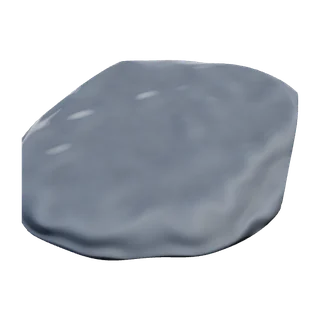
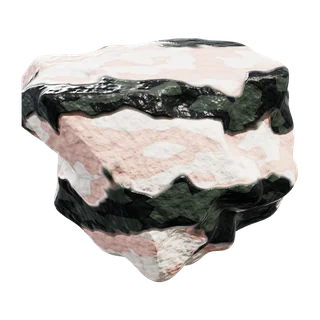
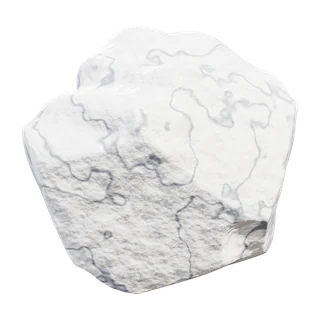
Slate splits into thin flat sheets. What caused this?
A rock has light and dark bands, and you can see its crystals. What is it most likely to be?
What would happen if the gneiss got even hotter?
Step 6 of 11 · I do · Worked example
Identifying a rock
Geologists identify a rock by looking closely and asking questions in a set order. The questions are written as a key. Follow along as the key is used on Specimen 1. Turn the specimen and use the hand lens at each step.
- 1
“Start at couplet 1. The surface isn't glassy, and I can see crystals or grains, so it isn't obsidian. Go to 2.”Couplet 1b
- 2
“There are no holes, and the test results say it feels heavy. It isn't pumice. Go to 3.”Couplet 2b
- 3
“With the hand lens, the pieces fit together like a jigsaw, with no gaps. These are crystals, not grains stuck together. Go to 6.”Couplet 3b
- 4
“There are no bands, and it doesn't split into sheets. Go to 8.”Couplet 6b
- 5
“The crystals are large, a few millimetres across, in several colours: grey glassy quartz, pink and white feldspar, and black mica. That matches 8a.”Couplet 8a
Specimen 1 is granite, an igneous rock
Its large crystals show that the magma cooled slowly, deep underground, over thousands to millions of years.
In the worked example, which clue showed that Specimen 1 is igneous and not sedimentary?
Step 7 of 11 · We do · Guided practice
Try it with help
Now use the key yourself, with some help. Specimen 2 has a hint for every question. Specimen 3 gives you a hint only when you need one. Specimen 4 is nearly all up to you.
Hints are on for every question.
A hint appears if you choose a wrong answer.
Use the key on your own. Ask for a hint only if you are stuck.
Step 8 of 11 · You do · Independent practice
Your turn
Identify each specimen on your own, using the key, the hand lens and the test results. Your first answer for each specimen is the one that counts. Specimens E, F and G are extension.
Want more rocks? The rock identification page has 18 rocks in 3D, the tests explained, a longer key and mystery rocks to practise on.
Step 9 of 11 · Apply
Around the rock cycle
Rocks keep changing from one type into another. These changes make up the rock cycle, and most of them take thousands to millions of years.
The diagram is a slice through Earth's crust. Follow one body of rock as it moves around the rock cycle: it has a name tag and a ring around it, and the small wheel in the sky shows which stage of the cycle it has reached. Each process adds the time it usually takes. Do the three tasks in order.
Start with task 1.
| Process | What happens | Usual time |
|---|---|---|
| Weathering and erosion | Rock breaks into pieces that are carried away | Thousands to millions of years |
| Deposition | Sediment settles in layers | Hours to thousands of years |
| Burial, compaction and cementation | Layers are squeezed and glued into rock | Thousands to millions of years |
| Heat and pressure | Minerals change without melting | Millions of years |
| Melting | Rock melts into magma | Thousands to millions of years |
| Slow cooling underground | Magma cools into rock with large crystals | Thousands to millions of years |
| Eruption and fast cooling | Lava cools into rock with tiny crystals, or glass | Days to years |
| Uplift | Rock is pushed up towards the surface | Millions of years |
Which part of the rock cycle can happen fastest?
Why can't you watch a rock change from one type into another during your life?
Step 10 of 11 · Apply
Properties and uses
The way a rock formed gives it its properties, and its properties decide what it is good for.
Properties are features of a material, such as how hard it is, whether it splits easily, how heavy it is, and whether water can soak into it. Look at the six rocks below, then match each use to the best rock.
Why is sandstone a poor choice for a kitchen benchtop?
Step 11 of 11 · Check
Exit check
Six questions on the whole lesson. You get one try at each, so think before you choose.
A rock has large crystals that you can see easily. How did it form?
Which processes turn loose sand into sandstone?
A rock is light, full of holes, and floats on water. What is it?
Which of these usually takes millions of years?
Uluru's layers formed flat, but now they run almost straight up and down. Why?
Why is slate a good rock for roof tiles?
Crayon rock cycle
Make all three types of rock from wax crayon shavings, then compare your model with the real rock cycle. You will need an adult for the melting step.
For teachers
Curriculum
Australian Curriculum: Science, Version 9. Year 8, Science Understanding, Earth and space sciences.
AC9S8U04: describe the key processes of the rock cycle, including the timescales over which they occur, and examine how the properties of sedimentary, igneous and metamorphic rocks reflect their formation and influence their use
How the lesson is taught
The lesson uses explicit instruction. Each phase hands a little more of the work to the student.
- Review (screen 2) checks the ideas students need: particles in a cooling liquid, weathering and erosion, and heat and pressure underground.
- Learn (screens 3 to 5) teaches each rock type with a model students control, followed by checks for understanding with feedback on every answer.
- I do (screen 6) is a worked example that models the identification key one step at a time.
- We do (screen 7) is guided practice. Hints fade from full support on Specimen 2 to none on Specimen 4.
- You do (screen 8) has four specimens to identify independently, plus three extension specimens. For more practice, the rock identification page covers 18 rocks, the tests and look-alike pairs.
- Apply (screens 9 and 10) covers the rock cycle journey, in the same watch, together and your-turn sequence, and properties and uses.
- Check (screen 11) is a six-question exit check mapped to the four success criteria.
Allow about two lessons. The worked example is a natural place to start the second one.
About the models
- The 3D specimens are computer models built to show the features students use to identify each rock. Real hand specimens are better wherever you have them.
- The cooling lab keeps the same minerals in every run, so cooling speed is the only variable.
- The layer tank's river carries mud, sand and pebbles every time. The speed slider decides which sizes the water can lift and how far each travels before settling, so students see for themselves that calm water lays down mud, a steady flow lays down sand, and a flood drops pebbles near the inlet while the finer sediment washes through.
- The rock cycle journey simplifies where magma comes from. Melting continental crust mostly produces granite-type magma, and most basalt comes from melting in the mantle.
- Times in the journey are rough typical values for comparison, not measurements.
- The pictures of Karlu Karlu, Kata Tjuta and Uluru are illustrations.
Saved progress
Answers and progress are saved only in this browser on this device. Nothing is sent anywhere.